“FLYING PINK TEAPOTS IN SPACE”
 Someone once challenged me that I could no more prove the
existence of God than I could disprove the existence of flying pink teapots in
space. My immediate response was that I
had never asserted that such (flying teapots) did not exist.
Someone once challenged me that I could no more prove the
existence of God than I could disprove the existence of flying pink teapots in
space. My immediate response was that I
had never asserted that such (flying teapots) did not exist.
However, after some
introspection and study, I concluded that she is right. I cannot disprove
the existence of her flying pink teapots nor can I prove the existence of
God. That being said, there is a more philosophically important and
challenging issue to be considered--that of evidence.
The teapot example
actually comes from the following found in Bertrand Russell's "Is There
a God?"
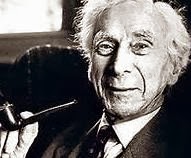 "Many orthodox people speak as though it were the business of
sceptics (sic) to disprove received dogmas rather than of dogmatists to prove
them. This is, of course, a mistake. If I were to suggest that between the
Earth and Mars there is a china teapot revolving about the sun in an elliptical
orbit, nobody would be able to disprove my assertion provided I were careful to
add that the teapot is too small to be revealed even by our most powerful
telescopes. But if I were to go on to say that, since my assertion cannot be
disproved, it is intolerable presumption on the part of human reason to doubt
it, I should rightly be thought to be talking nonsense. If, however, the
existence of such a teapot were affirmed in ancient books, taught as the sacred
truth every Sunday, and instilled into the minds of children at school,
hesitation to believe in its existence would become a mark of eccentricity and
entitle the doubter to the attentions of the psychiatrist in an enlightened age
or of the Inquisitor in an earlier time."[1]
"Many orthodox people speak as though it were the business of
sceptics (sic) to disprove received dogmas rather than of dogmatists to prove
them. This is, of course, a mistake. If I were to suggest that between the
Earth and Mars there is a china teapot revolving about the sun in an elliptical
orbit, nobody would be able to disprove my assertion provided I were careful to
add that the teapot is too small to be revealed even by our most powerful
telescopes. But if I were to go on to say that, since my assertion cannot be
disproved, it is intolerable presumption on the part of human reason to doubt
it, I should rightly be thought to be talking nonsense. If, however, the
existence of such a teapot were affirmed in ancient books, taught as the sacred
truth every Sunday, and instilled into the minds of children at school,
hesitation to believe in its existence would become a mark of eccentricity and
entitle the doubter to the attentions of the psychiatrist in an enlightened age
or of the Inquisitor in an earlier time."[1]
The technical term
for this type of argument is “Reasoning by Analogy.” That is to say that one might put forward an
argument either in the positive or the negative by positing a parallel and
analogues argument. While this may be a
fair argument in some matters it fails in the case of comparing God’s existence
or lack thereof with my friend's flying pink teapots or lack thereof.
Sorry my friend and
Bertrand Russell, your argument just does not work for three chief reasons.
First, there are no reasons whatsoever, to believe in flying pink
teapots. That is to say there is no
pragmatic reason beyond one’s unsupportable rational or should I say irrational
objection to God's existence to believe such a thing exists. Add to that point this. There are no logical nor are there formal
arguments for the existence of same. It
is all supposition and reactionary supposition at that.
Second is this. There
were and are a multitude of reasons to believe in the existence of God. However, at this point one must exercise
great caution. There is a great
difference between evidence that points to a reality and a formal proof of that
reality.

 There is much evidence that points toward the existence of
God but “iron-clad” proof is another matter.
In other words, evidence points toward what may or may not be proven. Said another way, proof requires evidence
but evidence does not necessarily lead to proof!
There is much evidence that points toward the existence of
God but “iron-clad” proof is another matter.
In other words, evidence points toward what may or may not be proven. Said another way, proof requires evidence
but evidence does not necessarily lead to proof!
That leads us then to
the third issue and that is the matter of plausible or implausible.
If in saying there is
no proof, one is also saying that there is no evidence such is not true—one may
reject the evidence(s) for God but that is far different than postulating that
there is no evidentiary argument. Again,
one can reject the argument for any number of reasons but such rejection in no
way means that there is no argument.
In the case of God
such evidentiary argument is chiefly presented in four ways. There is the ontological argument, the
cosmological argument, the teleological argument, and the moral argument. In these arguments, there is evidence which
stands the test of reason and inquiry but again the limitation is that they
simply make plausible the possibility of God.
This point was made and made well in the debate between the late
Christopher Hitchens and Frank Turek.[2]
 As noted, one may view the argument as less than convincing,
less than compelling or even incomplete but that is far different than saying
there is no argument. Now back to flying
pink teapots—there is no plausible argument for flying pink teapots in outer
space. It would seem that Russell was
and my friend is grasping at cosmic straws in an ill fated attempt to employ "Reasoning
by Analogy" in an effort to argue his and her case.
As noted, one may view the argument as less than convincing,
less than compelling or even incomplete but that is far different than saying
there is no argument. Now back to flying
pink teapots—there is no plausible argument for flying pink teapots in outer
space. It would seem that Russell was
and my friend is grasping at cosmic straws in an ill fated attempt to employ "Reasoning
by Analogy" in an effort to argue his and her case.
However vehement the
opposition, there yet remain the four arguments that point to the plausible
possibility of there being God. No proof just evidence that points toward His existence and away from His non-existence.
[1] -- Bertrand Russell, "Is There a God?"
commissioned by, but never published in, Illustrated Magazine (1952:
repr. The Collected Papers of Bertrand Russell, Volume 11: Last
Philosophical Testament, 1943-68, ed. John G Slater and Peter Köllner
(London: Routledge, 1997), pp. 543-48, quoted from S T Joshi, Atheism: A
Reader


